
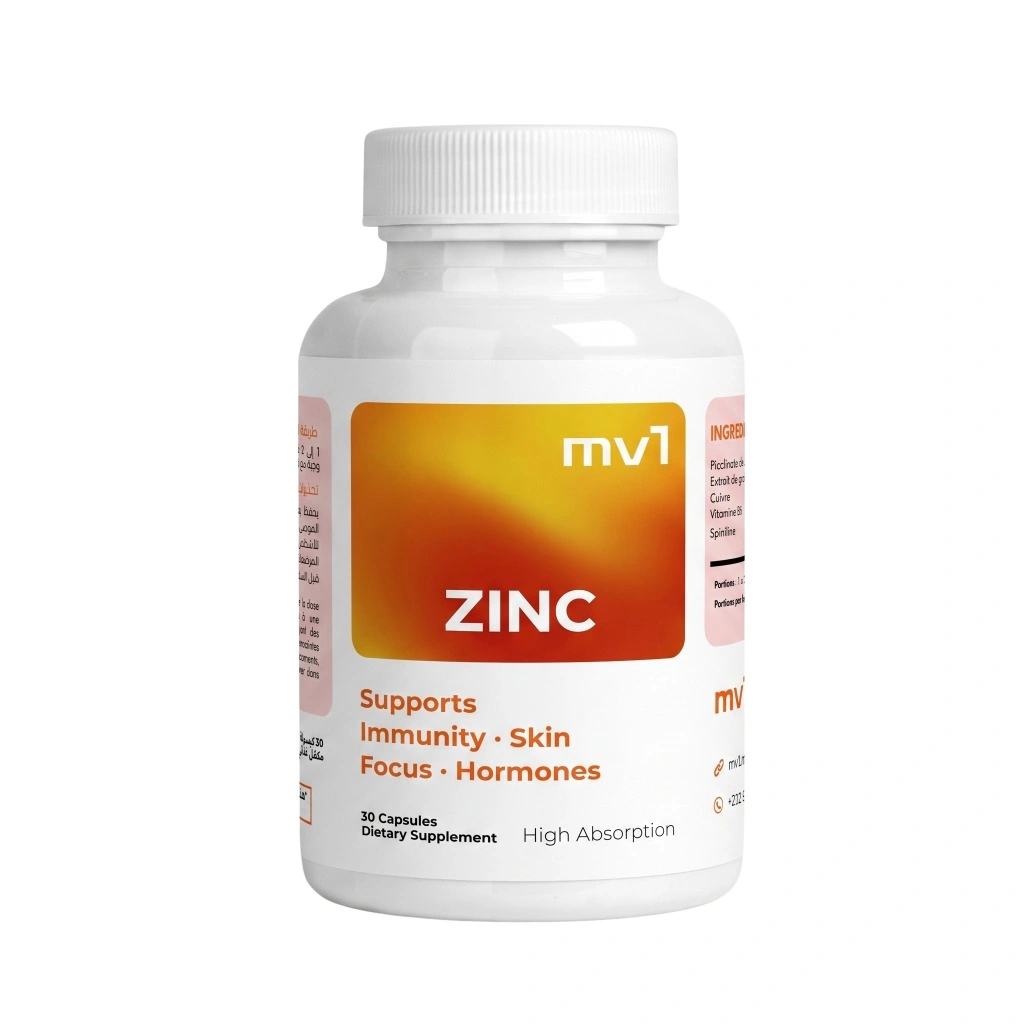
From Casablanca to Tangier, hair thinning (chute de cheveux / تساقط الشعر) and persistent adult acne drive thousands of Moroccans to cosmetic clinics each month. While topical serums and shampoos address the surface, cellular zinc deficiency is often the hidden internal culprit.
1. The Biological Link Between Zinc Deficiency & Hair Shedding
Hair follicle cells are among the fastest-dividing cells in the human body. To produce new keratin strands during the anagen (growth) phase, follicles require continuous cellular protein synthesis, governed by zinc-dependent metalloenzymes.
When dietary zinc is low, the body prioritizes vital organs (heart, liver, immune system) and shuts down non-essential tissue maintenance. Hair follicles prematurely shift from growth to the telogen (shedding) phase, leading to diffuse hair thinning across the scalp.
2. DHT Inhibition & Oily Scalp Regulation
In both men and women, androgen sensitivity plays a significant role in hair miniaturization and excess scalp sebum. Dihydrotestosterone (DHT) binds to follicle receptors, causing them to shrink over time.
Clinical dermatology studies have demonstrated that zinc acts as a natural 5-alpha reductase inhibitor—the enzyme responsible for converting testosterone into destructive DHT. By moderating follicular DHT exposure and regulating the sebaceous glands, zinc helps maintain a balanced, healthy scalp microbiome.
3. Clinical Proof: Clearing Hormonal Acne & Blemishes
Zinc is clinically recognized as one of the most effective oral anti-inflammatory minerals for skin clarity:
- Suppresses colonization of Cutibacterium acnes bacteria without inducing antibiotic resistance.
- Inhibits mast cell degranulation, dramatically reducing red, painful cystic bumps along the jawline and cheeks.
- Accelerates wound healing and epidermal cell turnover, helping clear post-inflammatory hyperpigmentation (acne spots).
4. Why Zinc Picolinate Beats Pharmacy Zinc Sulfate
If you have ever taken classic Moroccan pharmacy zinc (such as Zinc Sulfate or Gluconate), you likely remember intense stomach nausea within 20 minutes of ingestion. Zinc Sulfate is notorious for irritating the gastric mucosa.
Zinc Picolinate is bound to natural picolinic acid—the exact chelating agent the human pancreas produces to absorb minerals. Comparative trials conducted at Bemidji State University showed that Zinc Picolinate achieves significantly higher serum and hair zinc accumulation than zinc gluconate or citrate, with zero gastric discomfort.